
MIC Academy Insights:
This is how MIC builds 5G indoors
How Do We Build 5G?
Get an insight into how MIC Nordic creates the connected indoor environments of tomorrow using advanced 5G technology.
Through innovative solutions and tailored system designs, MIC Nordic delivers reliable and secure indoor coverage, regardless of the building’s complexity or challenges.
Learn more about our approach to building 5G networks and how they can improve communications, increase efficiency, and create new opportunities for businesses, industries, and public environments.
Understanding what 5G really means – and the differences between the various types of 5G technology – is essential. Read more!
Brownfield Office Building
MIC Nordic has extensive experience in designing and deploying indoor coverage systems, with a large number of successful installations in its portfolio. Existing buildings can be upgraded to meet the latest 5G standards without replacing previous infrastructure investments.
A typical installation may look like this:
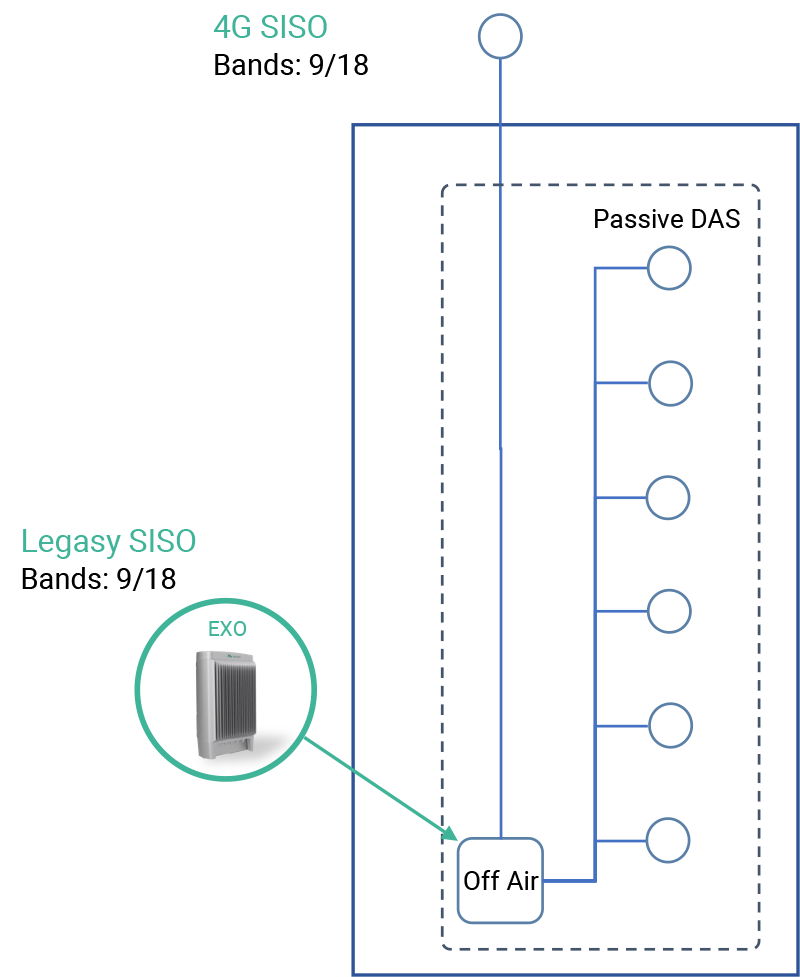
4G Indoor Coverage – Existing Office Building
An off-air-fed passive DAS captures external cellular signals through a donor antenna and distributes them throughout the building using passive components such as splitters and antennas.
Advantages
- Cost-effective and simple installation
- No need for a direct network connection
- Suitable for smaller buildings
- Potential support for multiple operators on legacy frequency bands
Disadvantages:
- Signal degradation over longer distances
- Limited coverage and scalability
- Susceptible to interference and PIM
- No signal enhancement for weak donor signals
- Difficult to upgrade as capacity requirements grow
A passive DAS is ideal for small to medium-sized buildings but becomes less effective in larger or more complex environments.
Adding 5G to an Existing Office Building
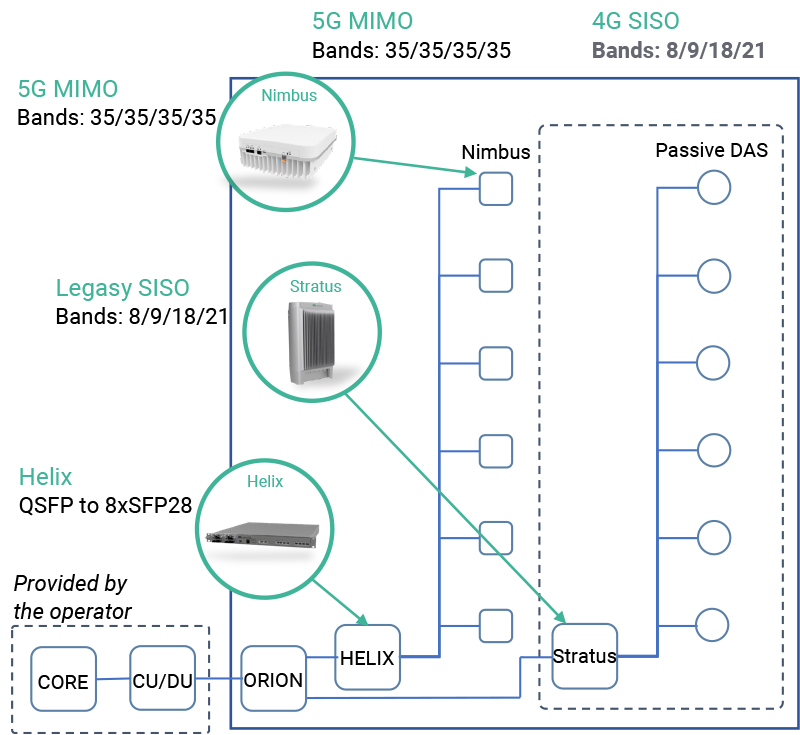
To deploy 5G NR, MIMO technology and a fibre-based architecture are essential. By adding these capabilities to an existing passive DAS infrastructure, you can preserve current investments, maintain reliable indoor coverage, and introduce advanced, ultra-fast, low-latency communications where they are needed most – unlocking the full potential of 5G.
The combination of Nimbus and Stratus enables comprehensive 4G coverage while adding 5G capabilities precisely where and when they are required.
Nimbus is a fibre-to-the-edge indoor coverage solution that delivers the highest data throughput available. The platform is operator-independent and is not restricted to any specific mobile network provider.
Key end-user benefits
- A single remote unit supporting 5G MIMO for up to four operators
- Support for all operators within the same system
- Simultaneous support for public mobile networks and Private 5G
- Remote or on-site configuration and upgrades
- High-capacity fibre distribution of up to 1,600 MHz, designed for 5G and future technologies
- ORAN-ready architecture
5G in a New Office Building
We are currently in a transition period from 4G to 5G. Many devices still rely on 4G connectivity, which is why MIC Nordic recommends a combination of legacy frequency bands and 5G NR when deploying new indoor coverage systems.
NIMBUS – Simplified Design
Avoiding parallel network architectures saves both time and cost for all stakeholders.
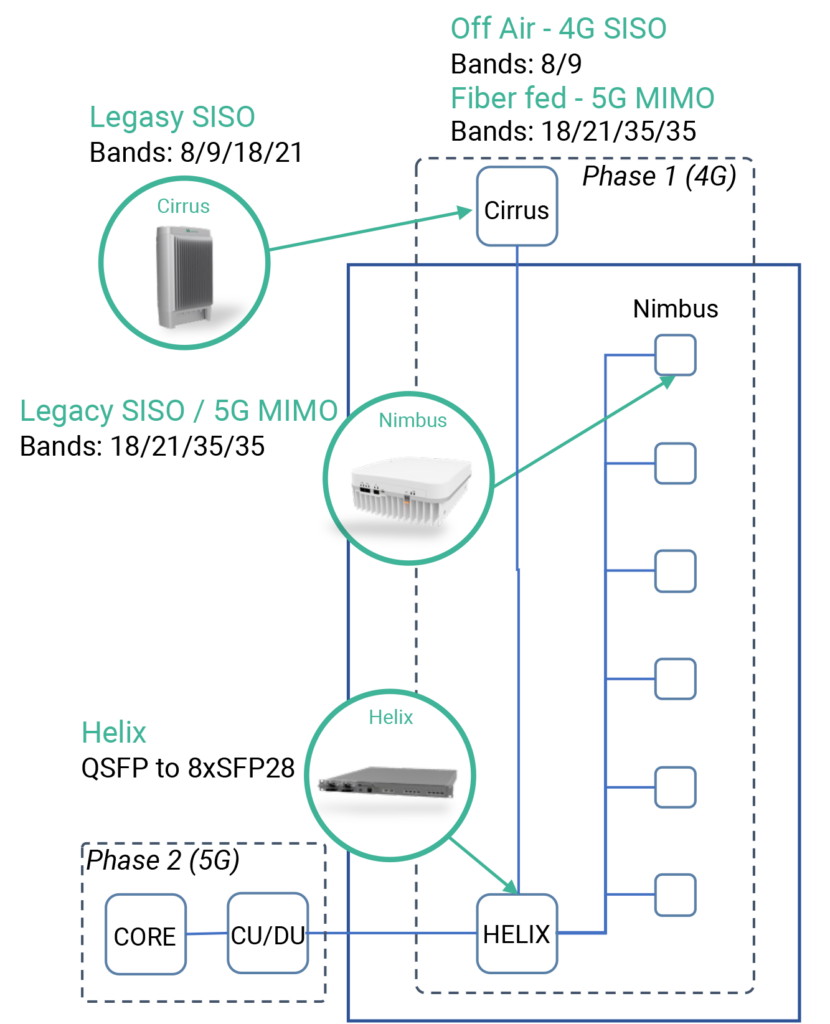
By choosing the Nimbus 13 configuration (Legacy SISO / 5G MIMO 18/21/35/35), all mobile operators can be supported through a single solution, providing both 4G SISO and 5G MIMO coverage.
The use of off-air signals enables faster deployment and a smoother migration path to full 5G services. The combination of Nimbus 13 and Cirrus provides immediate 4G coverage while allowing 5G services to be added when required.
Phase 1:
Deploy immediate 4G coverage using the Cirrus Off-Air Master, ensuring connectivity from day one.
Phase 2:
Add 5G services later – whether Private 5G and/or MNO-operated 5G – to increase capacity, functionality and business value.
5G Architecture Example:
Single Operator, Single Sector
Operator-Approved Architecture
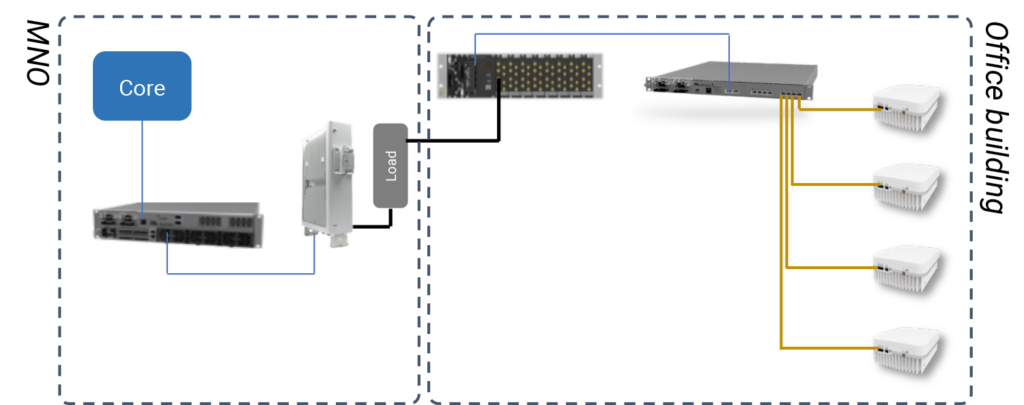
RF-to-RF connection from the operator network to the local network
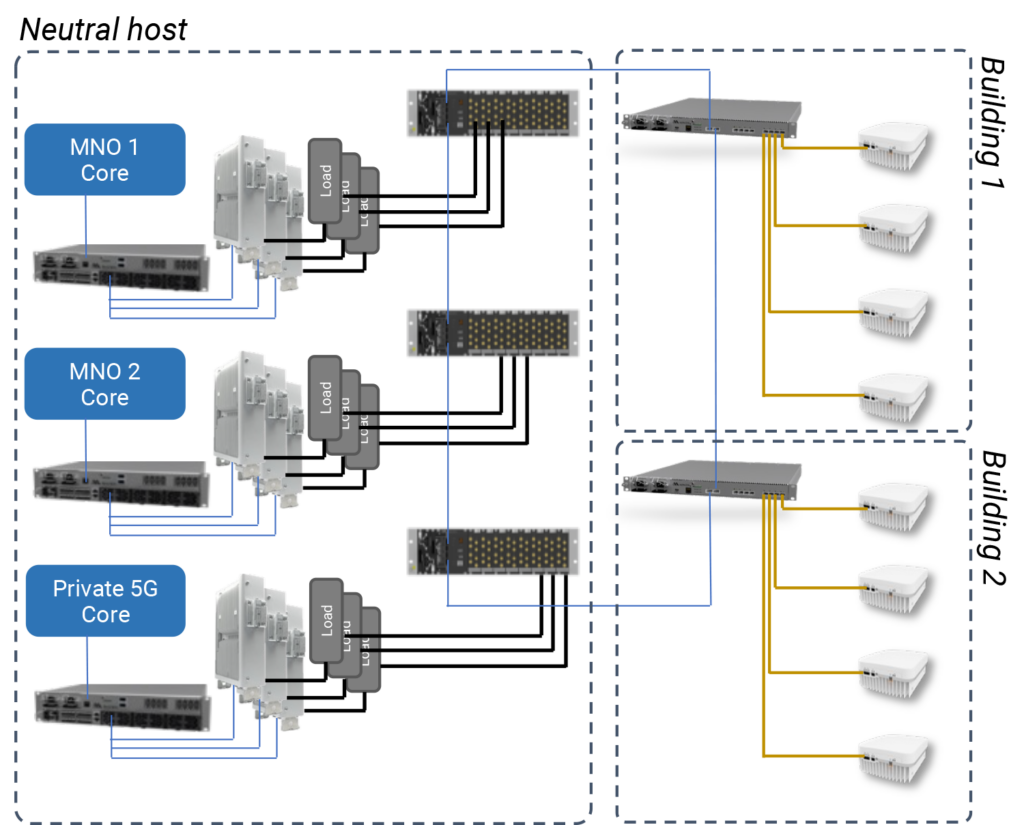
The operator deploys the baseband equipment together with active, high-power RRUs (Remote Radio Units). Signal levels must be reduced before connecting to the Orion system.
This results in:
- An unnecessary amount of equipment
- Higher energy consumption due to excessive RAN equipment
- Increased space requirements
MIC / MAVEN Preferred Architecture
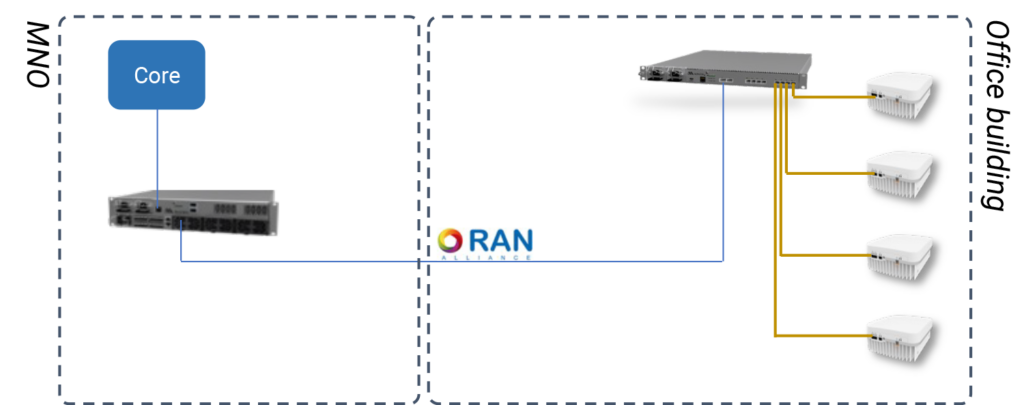
ORAN connection from the operator network to the local network
The operator deploys the baseband equipment and connects to Helix via an ORAN fibre link.
This results in:
- Cost-effective and straightforward deployment
- Improved energy efficiency through reduced RAN equipment
- Lower space requirements
5G Architecture Example:
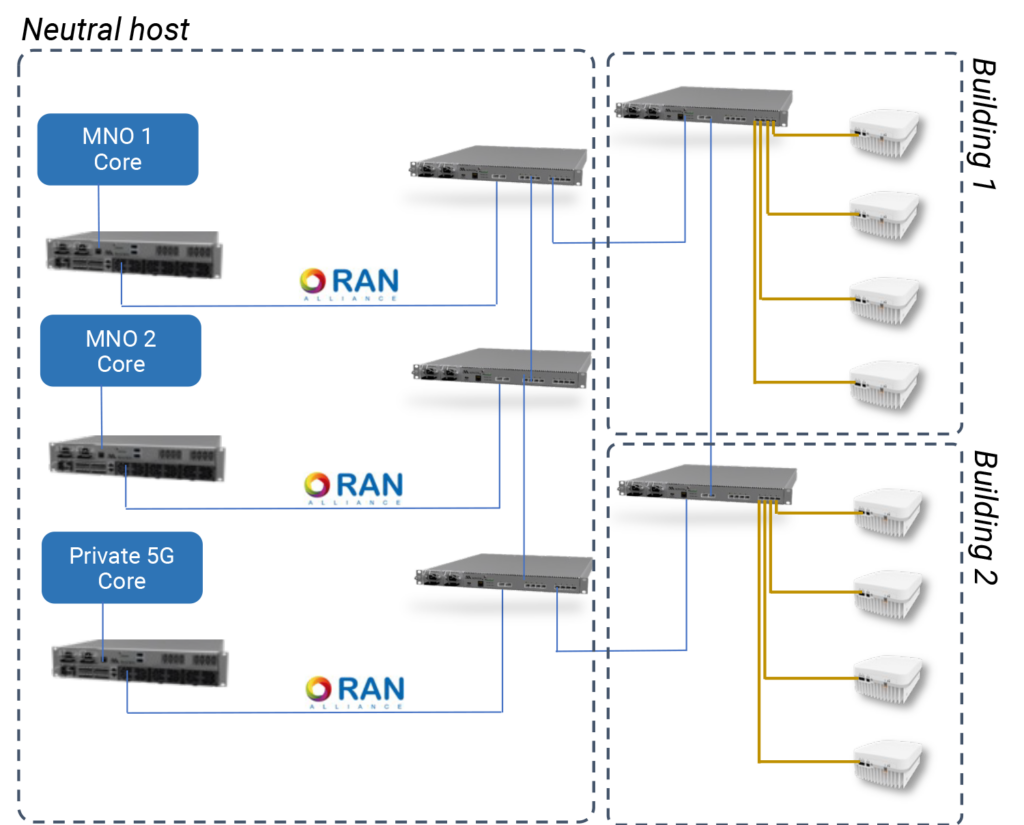
Multi-Operator, Multi-Sector Architecture with Private 5G
Operator-Approved Architecture
MIC / MAVEN Preferred Architecture
Find out more about
Mobile coverage indoors
Mobile coverage in car parks/tunnels
Mobile coverage in vehicles
Want to know more?
Do you have any questions about our products and services?
Or would you like to find out what we can do for the mobile coverage in your working environment?
Enter your question here and we’ll get back to you as soon as possible.